
FHIL · Health innovation verification studio

FHILabs

Before you commit capital, see whether the health model can work in the real system.

FHIL builds and tests healthcare technology, one workflow at a time.

For foundations, public agencies, and health investors, the 45-Day Innovation Verification Sprint is a defined commission. We investigate where a task breaks down. We build or configure a working tool, then test it with intended users.

You receive a working MVP, a governance and data model, and an evidence and decision record. The recommendation is explicit: proceed, add conditions, redesign, test further, or stop. We keep the test narrow. Existing care, safeguards, and decision authority stay in place.

Two questions for the leader deciding what to back

Which part of care do you want taken apart and rebuilt for the age of AI—and what do you want to be known for having made possible for patients?

Start with one task that matters to a patient or the person supporting them. Find what prevents it from getting done. Build and test the response before committing to a wider rollout.

Three engagements, by decision need

Choose the work your next decision needs.

Each engagement has an agreed scope, deliverables, and fee.

For the Sprint, we also agree access, permissions, and the checks the working tool must meet before the 45-day clock begins.

Further implementation and ongoing support are scoped separately. You do not have to commit to them to commission the first test.

How FHIL works

Find the barrier. Build the tool. Test the task.

We follow one healthcare task from start to finish. The barrier may be missing information, a broken handoff, or lack of access to care. We establish what needs to change before choosing the technology. We build or configure software, including AI tools, when the task calls for it. Existing tools may be enough.

  1. 01First person

    Find what stops onepersonfrom completing a task that matters.

  2. 02First form

    Build or configure a workingfirst formfor one complete pathway. Thentest.

    Built through the 45-Day Innovation Verification Sprint.
  3. 03Evidence and decision

    Hand over the work. Record what held, failed, and remains uncertain. Thendecide.

One complete pathway can justify the next stage. It cannot, by itself, justify scale.

The work connects three realities:

01 · Institution and capital
Who would fund the next stage, operate the tool, and cover its ongoing costs.
02 · First person
Whether the intended user can complete the task within the defined safeguards.
03 · Real pathway
How the approach compares with current practice: handoffs, corrections, and the human work required.

Evidence in the work

Agora and ATLAS show two forms of commissioned work.

Agora produced research and systems maps for a foundation examining community mental-health support. ATLAS produced an AI-assisted patient tool and findings that informed a funding pause. The outputs differ because the questions differ.

01

Agora Community Mental Health
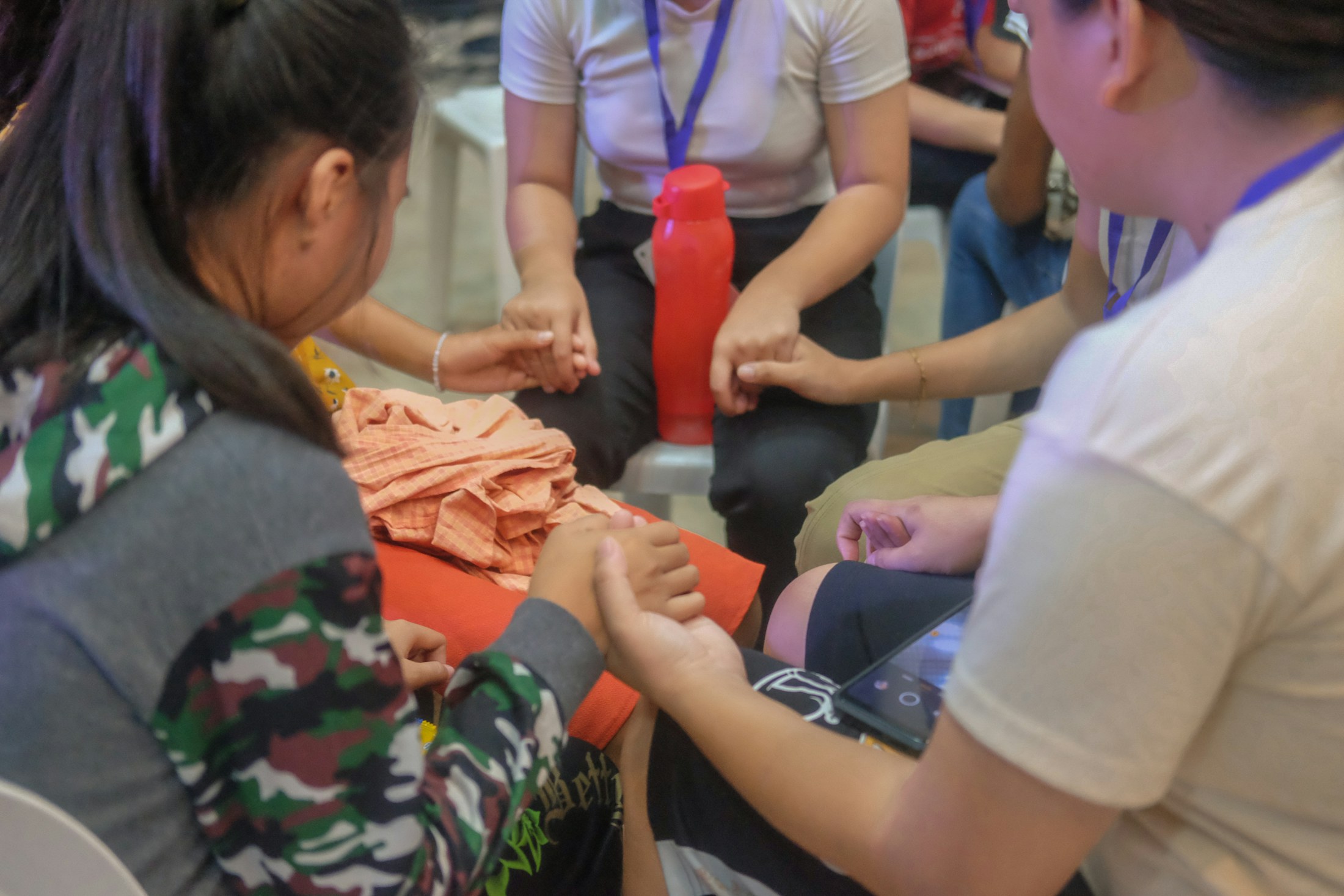
People holding hands in a community circle
The commission
A Swedish international foundation commissioned research into faith-based mental-health support in Nigeria.
The question
What support do community actors provide? Where are the gaps in training, safeguards, and referral into care?
The delivered work
Research findings, systems maps, learning materials, and a post-engagement report.
The buyer gained
A documented view of community roles and referral gaps to inform further planning. A live clinical pilot was not established by this work.

What it demonstrates: FHIL can turn field research into a systems map that makes the next design questions explicit.

Explore the Agora pathway

02

ATLAS Rare Disease AI On-Ramp

An older adult using a tablet at home
The commission
A U.S. family foundation backing a rare-disease patient community commissioned a two-stage test of whether specialist knowledge could become a responsible AI-assisted patient pathway.
The decision
Should the buyer fund a larger platform intended to reach the wider patient community?
The operating form
FHIL built a source-oriented knowledge base. FHIL built a patient on-ramp and prompt system. FHIL defined use boundaries and quality checks. FHIL also built a distribution package.
What the evidence changed
The technical core was feasible. The expected distribution channel and paying demand were not established. The buyer funded two stages and paused further work based on the findings.

What it demonstrates: FHIL can turn scarce specialist knowledge into a bounded AI-assisted pathway that informs a funding decision.

Explore the ATLAS decision

Evidence boundary: Agora establishes commissioned research and systems mapping, not a live platform, completed clinical pilot, or improved care outcomes. ATLAS established a feasible first product form and informed a funding decision. It did not establish sustained use, clinical effectiveness, scalable distribution, sustainable demand, or population outcomes.

Accountability

Victor Ladele leads every FHIL engagement.

Victor personally directs each engagement. He begins with the initial decision. He continues through the final operating form and recommendation.

His 22-year record spans clinical care, public-health institutions, WHO crisis response, UNICEF innovation, and institutional implementation.

Specialists join only when the decision requires their expertise. The client approves their participation.

See Victor's record and accountability model

An invitation to the health leader deciding what deserves support

The Call.

FHIL works with health leaders who see an ambition their institution cannot yet put into operation, and who will not ask that institution to carry risk it cannot defend.

You should not have to choose between the bold move and the defensible one.

Bring the ambition.

Twenty minutes is enough to tell whether it has a first person and a first form.

Send three lines:

  • What you want to make possible.
  • Who it should serve.
  • What your board must be able to defend.
No forms. No templates. Do not include patient-identifiable or institution-confidential information.Book the 20-minute call