Operating picture
Define the population, threat, terrain, resources, decision cadence, and critical unknowns.
Independent engagement line
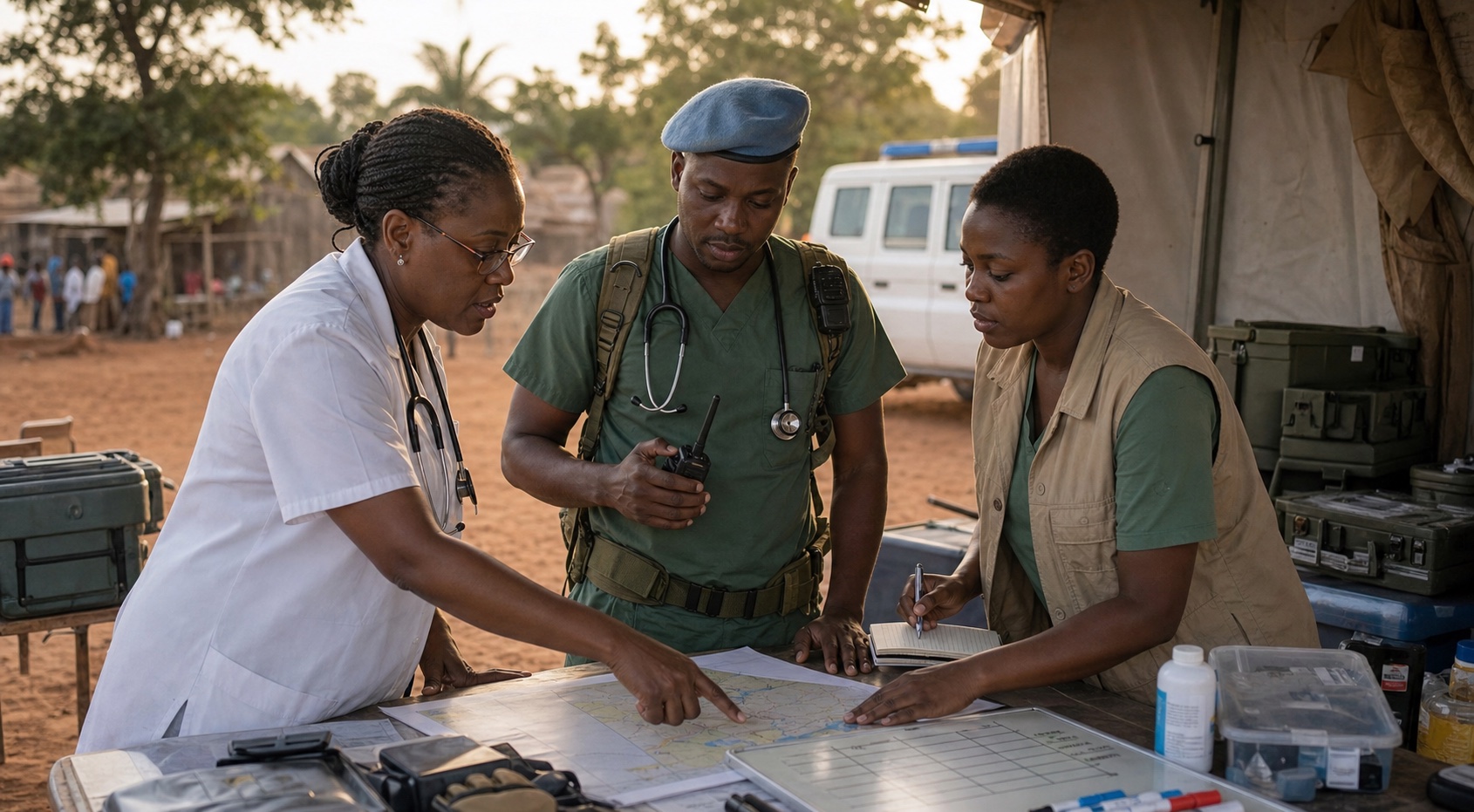
A separately commissioned engagement for institutions that must make a critical health operation executable under severe constraint.
Your outcome
What you commission
FHIL works with the accountable institution to establish the operating picture, roles, decision cadence, information flows, care and referral pathways, field tools, escalation, and transition requirements the mission needs.
This is a separate execution engagement. You can commission it directly when the mandate and operating need are clear.
Discuss this engagementWhat the work can include
Define the population, threat, terrain, resources, decision cadence, and critical unknowns.
Build what must be captured, verified, displayed, escalated, and acted on.
Make triage, treatment, movement, referral, and urgent escalation executable.
Clarify who owns each decision, interface, handoff, exception, and accountability.
Create the minimum tools required and test whether they survive contact with people, infrastructure, and place.
Define how the operation transfers, adapts, integrates into local systems, or closes responsibly.
Strong engagement triggers
01A response mandate must become a field-ready operating model.
02Available information is not producing a reliable decision picture.
03Multiple actors are present, but authority and critical handoffs remain unclear.
04A temporary intervention needs a credible path to local ownership or closure.
What you receive
The handover is defined in the engagement agreement and may include the operating picture, coordination model, decision rhythm, roles, care and referral pathways, field tools, escalation protocols, evidence record, and transition plan.
FHIL does not replace incident command, clinical authority, government authorization, humanitarian coordination mechanisms, or the institution responsible for the operation.
Relevant record
Victor Ladele’s record includes military clinical leadership, WHO Ebola-response work, public-health innovation across Pacific island countries, and a global UNICEF mental-health innovation portfolio.
That history does not guarantee an outcome. It provides a documented basis for recognizing how trust, clinical practice, institutions, information, and field constraints interact.
Inspect the operating recordCommission the engagement
Tell us the mandate, population, location, operating constraints, what already exists, what must work, and the required decision or deployment date.
Discuss this engagement Or write directly to victorladele@fhilabs.com. Do not include patient-identifiable or institution-confidential information.